
Shell and tube heat exchangers support the auxiliary systems that keep hydroelectric and thermal power plants operating reliably. By transferring heat from lubricating oil, hydraulic fluid, or circulating water into a cooling-water circuit, they help maintain equipment temperatures within specified limits. Their construction can be adapted to different fluids, pressures, installation spaces, and maintenance requirements.
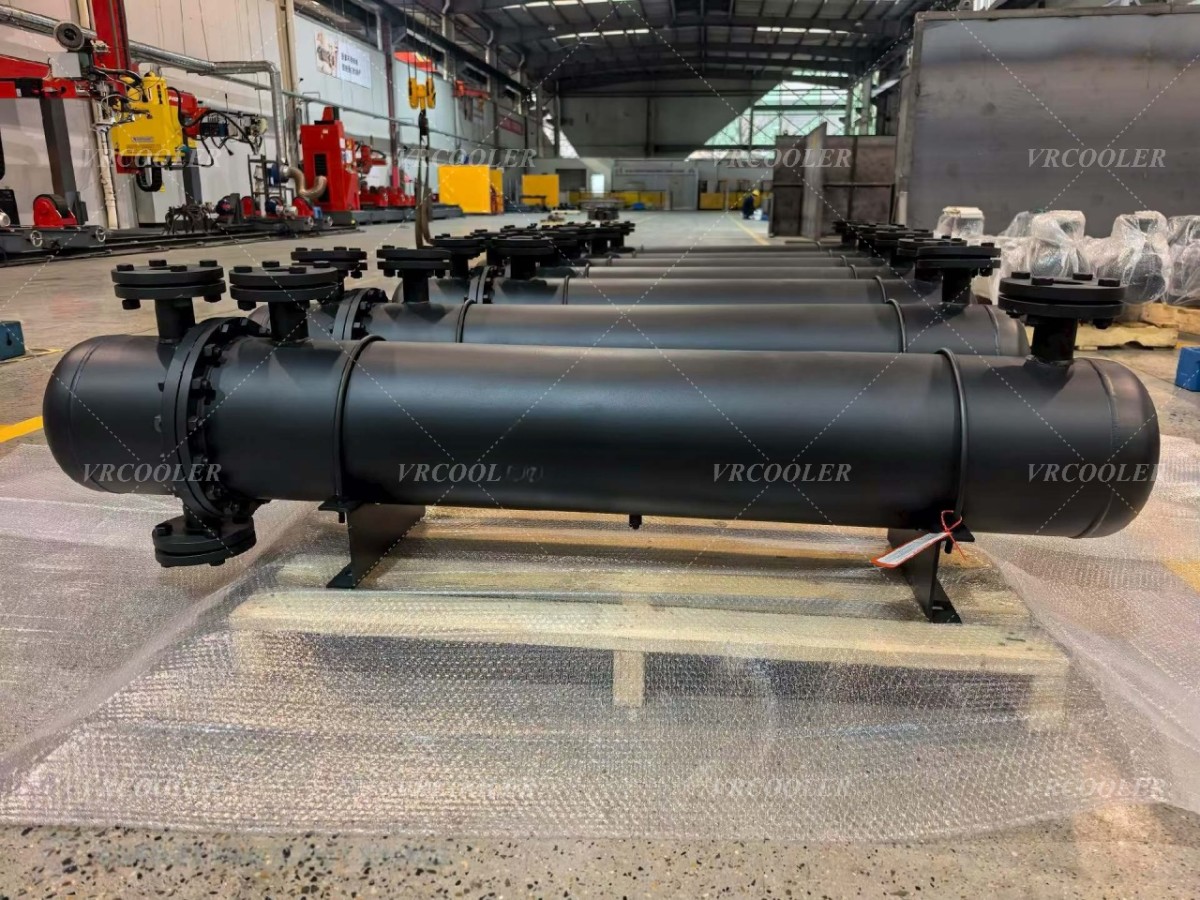
In hydropower plants, typical duties include cooling the oil serving turbine guide bearings, generator guide bearings, and thrust bearings. Where the bearing arrangement uses pumped oil circulation, an external shell and tube oil cooler transfers the bearing heat to cooling water. Hydraulic systems for turbine governors, inlet valves, and gates may also require oil cooling, depending on their operating duty.
In thermal power plants, shell and tube exchangers are used for steam-turbine and gas-turbine lubricating-oil cooling, as well as auxiliary equipment cooling. They can also serve compressor packages and auxiliary diesel engines where water cooling is specified. Maintaining the required oil temperature helps preserve the viscosity needed for lubrication and reliable operation.
A further application is the central closed cooling-water system. Here, a water-to-water shell and tube exchanger transfers heat from treated circulating water to the plant’s service-water supply. This arrangement keeps the treated circuit separate from the external cooling-water stream, allowing suitable water chemistry to be maintained around connected equipment while rejecting the collected heat.
The exchanger configuration should reflect cleaning needs and thermal expansion. Straight tubes with accessible end covers can facilitate tube-side mechanical cleaning, while a removable bundle provides additional access for inspection and maintenance. U-tube and floating-head arrangements offer different ways to accommodate expansion. Space for opening covers or withdrawing the bundle should be included in the installation layout.
Cooling-water quality strongly influences material selection and maintenance planning. River water, cooling-tower water, and seawater present different corrosion and fouling conditions. Stainless steel, copper-nickel, or titanium tubes may be considered after reviewing water chemistry, temperature, velocity, and material compatibility. Strainers and a suitable cleaning programme help manage debris and deposits that would otherwise reduce performance.
Each exchanger should be sized using the actual auxiliary heat load, fluid properties, flow rates, target outlet temperatures, and allowable pressure losses. The warmest expected cooling-water supply and the specified fouling allowance are important design inputs. For critical services, duty and standby arrangements, isolation valves, and temperature monitoring should follow the plant’s availability requirements.
For new installations or replacement projects, provide Vrcoolertech with operating and design conditions, water-quality information, and the required construction standard. Existing drawings, nozzle positions, mounting dimensions, and maintenance clearances are particularly useful for replacements. These details establish the basis for a shell and tube heat exchanger suited to the auxiliary system and its operating environment.