
An air gas cooler is an air-cooled heat exchanger used to reduce the temperature of compressed gas by transferring heat from the gas stream to ambient air. In natural gas compressor stations, the gas temperature rises after compression, and this heat must be removed before the gas continues to downstream pipelines, process units, metering systems, or further compression stages. A properly designed air gas cooler helps protect downstream equipment, improve compressor station reliability, reduce thermal stress, and maintain stable operating conditions in high-pressure gas service.
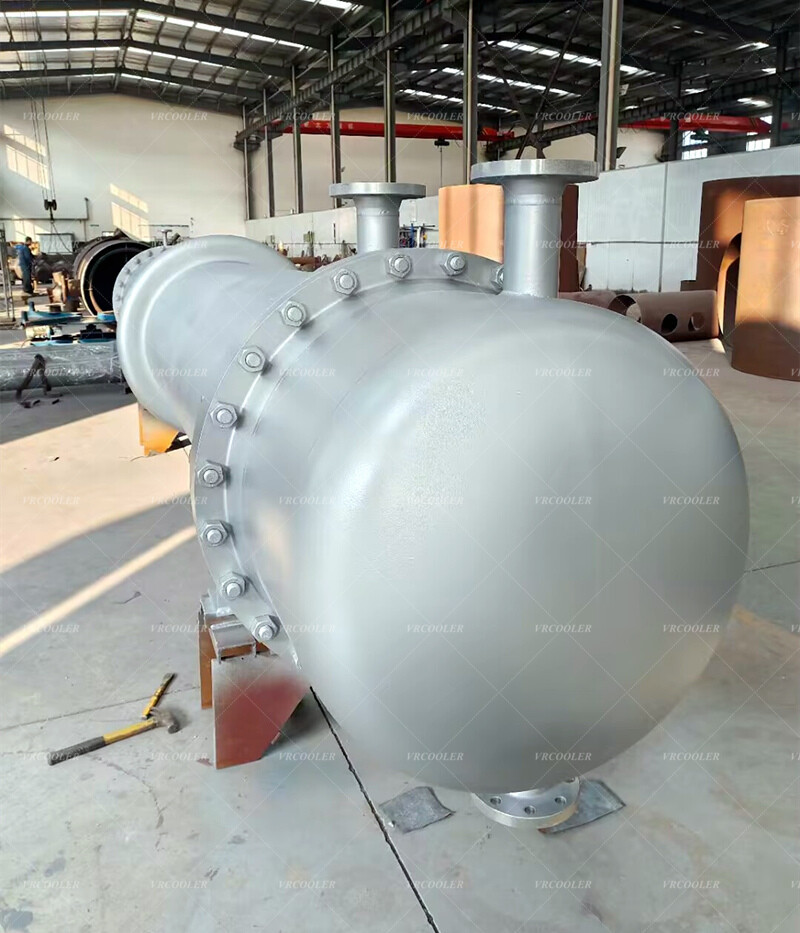
For this project, the air gas cooler is designed for a compressor aftercooler application at the Arsanjan Gas Compressor Station Project, IGAT VIII. The equipment item is AC-85001 A/B/C/D, with a quantity arrangement of 4 units, including 3 operating units and 1 standby unit. The design follows ASME Section VIII Division 1, API 661, and IPS-G-ME-245 requirements, which are typical standards for air-cooled heat exchangers used in oil, gas, and compressor station service.
The process fluid on the tube side is natural gas. According to the data sheet, each unit handles approximately 1,117,000 kg/hr of natural gas. The gas enters the cooler at about 69.74°C and leaves at about 55°C. The inlet pressure is around 1316 psia, and the maximum allowable pressure drop is specified with an allowable/calculated value of about 0.689/0.6205 bar. This shows that the cooler must remove a large heat load while keeping the gas-side pressure drop under control, which is very important in compressor station operation because excessive pressure loss increases compressor power consumption and affects pipeline efficiency.
The air side is designed for a maximum air inlet temperature of 40°C, with an air outlet temperature of approximately 57.1°C. The air flow rate per item is about 576.4 m³/s, and the air flow rate per fan is about 122.5 m³/s. The unit uses a forced draft arrangement, meaning the fans push ambient air through the finned tube bundles from below or from the fan side. Forced draft air coolers are widely used because they are easier to maintain, provide good fan access, and can offer stable cooling performance when designed with proper air distribution and adequate fan coverage.
The operating heat duty is approximately 12,036 kW for each apparatus. This is a large thermal load, so the heat exchanger surface, tube bundle size, fan power, air velocity, and fin design must be carefully matched. The data sheet indicates a face velocity of about 2.35 m/s, which helps maintain a balance between heat transfer and air-side pressure drop. If face velocity is too high, fan power and noise increase; if it is too low, the cooler may require excessive surface area and a larger footprint. A good air gas cooler design must achieve the required gas outlet temperature while maintaining acceptable noise, fan power, pressure drop, and mechanical reliability.
The tube bundle is one of the most important parts of the air gas cooler. In this design, the bundle size is approximately 3.37 m × 12.5 m, with 5 tube rows and parallel distribution. The data sheet lists 238 tubes per bundle and a total tube count of 1428. The tubes are seamless SA-179, with 31.75 mm outside diameter, 2.108 mm minimum wall thickness, 1.6 mm corrosion allowance, and 12.192 m maximum tube length. The tube layout is triangular, with a pitch of 69.85 mm. This type of geometry provides strong heat transfer performance while allowing enough air passage through the finned tube bank.
The fin design uses extruded aluminum fins made from ASTM B209 material. The fins have an outside diameter of 63.5 mm and a minimum thickness of 0.24 mm. Extruded fins are commonly used for air-cooled heat exchangers in gas service because they provide good mechanical bonding to the base tube and better durability than some light-duty fin types. The aluminum fin increases the air-side surface area significantly, which is necessary because air has a much lower heat transfer coefficient than gas flowing inside the tubes. For high-capacity compressor aftercoolers, fin quality and fin-to-tube contact are critical for long-term thermal performance.
The header material is SA-516 Grade 60, and the nozzle schedule includes 10-inch inlet and outlet connections with 600# RF flanges. The data sheet also includes vent, drain, temperature gauge, and pressure gauge connections, showing that the cooler is designed with the necessary operation and maintenance interfaces. For high-pressure natural gas service, the header design must consider pressure containment, welding quality, inspection requirements, nozzle loads, thermal expansion, and safe access for maintenance.
The fan system uses axial blade fans. Each bay requires at least two fans, with 4.57 m fan diameter, 5 aluminum blades, adjustable pitch, and a design absorbed power of around 26 kW per fan at design temperature. The driver is an asynchronous motor rated at 37 kW, 400V, 3-phase, 50 Hz, with IP65 protection and EExd IIB T3 explosion-proof classification. This is important for natural gas compressor stations because electrical equipment must be suitable for hazardous area requirements. The maximum noise level is specified as 85 dB(A) at 1 m from the source.
Structurally, the air gas cooler is designed for outdoor industrial duty. The data sheet shows hot dip galvanized ST37 structure, at-grade mounting, ladder, walkways, platform, and machinery walkway requirements. The design wind speed is 160 km/hr, and the structure is designed for UBC Zone IV earthquake condition. These details are important because air-cooled heat exchangers are large outdoor units exposed to wind, vibration, thermal cycling, and site environmental loads. A strong frame and proper access design help improve safety and simplify inspection and maintenance.
Vrcooler can design air gas coolers according to compressor station requirements, including gas flow rate, gas composition, inlet and outlet temperature, operating pressure, allowable pressure drop, ambient temperature, altitude, design code, hazardous area classification, noise limit, fan arrangement, tube material, fin type, corrosion allowance, and structural loading. The cooler can be supplied as a forced draft or induced draft air-cooled heat exchanger, with customized tube bundle dimensions, header design, fan selection, motor specification, access platform, coating system, and instrumentation.
A reliable air gas cooler is essential for natural gas compressor aftercooling. It reduces compressed gas temperature, protects downstream equipment, supports stable pipeline operation, and helps the compressor station maintain efficient performance. With API 661 design, high-pressure tube bundles, extruded aluminum finned tubes, explosion-proof fan motors, and heavy-duty galvanized structure, Vrcooler can provide customized air gas cooler solutions for demanding oil and gas applications.