
Steam surface condensers most commonly fail through tube-related problems (fouling, corrosion, erosion, and leakage) and air/steam-side issues that degrade vacuum and heat-transfer performance.
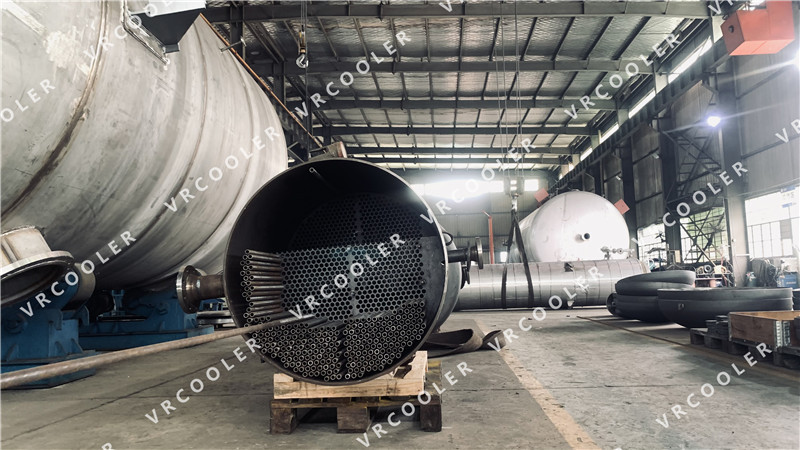
Major tube-related failure modes
Fouling and scaling: Deposition of biological growth, silt, iron oxides, or hardness scale on tube ID/OD reduces heat transfer, raises backpressure, and often precedes under-deposit corrosion.
General corrosion: Cooling-water chemistry issues (low pH, high chlorides, poor oxygen control) and improper material selection cause wall thinning and eventual tube leaks, especially in carbon steel and some copper alloys.
Pitting and crevice corrosion: Localized attack at deposits, rolled tube ends, tube supports, or crevices leads to pinhole leaks and sudden tube failures.
Erosion and erosion–corrosion: High-velocity water, flashing, or water droplet impingement at inlets, elbows, or near tube-sheet transitions mechanically wears tubes; in susceptible alloys this combines with corrosion to rapidly thin walls.
Galvanic corrosion: Dissimilar metals (e.g., copper alloy tubes with carbon-steel tube sheets or fasteners) in conductive water can set up galvanic cells, accelerating loss of more active materials.
Leaks, vacuum loss, and air in-leakage
Tube leaks: When a tube penetrates, cooling water leaks into the condensate, contaminating the boiler circuit with salts, oxygen, and corrosion products; this can quickly damage boilers and turbines if not detected.
Air in-leakage: Leaks at expansion joints, glands, manways, or tube sheets allow noncondensable gases into the condenser, raising backpressure and cutting turbine efficiency; persistent air ingress also promotes oxygen corrosion in condensate.
Ineffective air removal system: Degraded steam-jet ejectors or vacuum pumps, plugged inter/after-condensers, or poor condensate drainage reduce their capacity to remove air and noncondensables, leading to high condenser pressure.
Mechanical and structural issues
Tube support and vibration problems: Inadequate tube support spacing, broken supports, or flow-induced vibration can cause fretting, tube-to-support wear, and eventual tube rupture.
Thermal stresses and differential expansion: Large temperature transients or poor design of expansion joints and tube-bundle supports can crack tube sheets, welds, or shells, causing leaks and misalignment.
Erosion of tube sheets and water boxes: High-velocity flow, flashing, or entrained solids can erode inlet tube sheets and water-box linings, exposing base material and leading to leakage and corrosion.
Operational and chemistry-related failures
Poor condensate chemistry control: High dissolved oxygen, high conductivity, or contamination from cooling-water leaks drives corrosion of condensate piping, feedwater heaters, and boilers.
Improper layup and off-line protection: When condensers are taken out of service “wet” without oxygen scavengers or dry preservation, significant corrosion can occur, leading to tube failures on restart.
Inadequate cleaning and inspection: Failure to regularly clean tubes and inspect by eddy-current/visual methods allows incipient defects to grow into through-wall failures.
Practical troubleshooting focus
When backpressure rises or condensate quality worsens, operators typically check:
Condenser vacuum trends and ejector/pump performance.
Cooling-water inlet temperature, flow, and differential pressure for fouling or blockage.
Condensate conductivity, sodium, and dissolved oxygen to detect tube leaks or air ingress.